Commercial Mold Remediation in Uphams Corner, MA
Mold removed from affected walls, ceilings and storage areas in your Uphams Corner business premises. Call 24/7 to start your assessment and plan contained cleanup.
- Moisture source assessed
- Contained work and HEPA filtration
- Business access planning
Commercial Mold Remediation Services in Uphams Corner
In your offices and stockrooms, cleanup covers walls, suspended ceilings and reachable framing. Sound surfaces undergo cleaning followed by drying. Porous materials with damage are taken out.
Your affected rooms and source of moisture are the starting point. Equipment access and shared ventilation guide commercial mold cleanup planning.
A written scope of work defines removal, cleaning and separate repairs. Your property manager or facility manager can coordinate access around staff and customers.
- Wall and ceiling material assessment
- Contained removal of damaged materials
- Sound framing and non-porous surface cleaning
- Assessment of your affected shared HVAC system
- Controlled drying and final condition checks
Commercial Mold Removal: Signs to Look For
Returning growth, mustiness in rooms and damp finishes may signal moisture trouble in your space.
Mold Returning After Surface Cleaning
An unresolved moisture source or affected material may explain why you keep seeing spots return.
Musty Commercial Storage Areas
Persistent odor around shelving or cartons can accompany damp stockroom materials.
Soft Commercial Walls
Bubbling paint, swollen baseboards and soft drywall can accompany hidden dampness.
Growth Near Commercial Air Vents
Condensation or affected HVAC materials may occur alongside visible mold growth near your vents.
Spots on Commercial Ceiling Tiles
You may see tiles sag, water staining or dark patches under leaks from roofing or plumbing.
Your Commercial Mold Remediation Process
Contained mold removal comes first, followed by drying and verification. Your barriers stay up until those stages finish.
Commercial Mold Inspection
Checks include ceiling spaces, rooms and routes for access. A moisture meter finds damp areas; temperature patterns appear on a thermal imaging camera, which does not show mold.
Moisture Source and Commercial Scope
Assessment begins with leaks, shared systems and condensation. Removal boundaries and moisture corrections appear in your written scope of work, along with after-hours work or phased remediation.
Work Area Containment
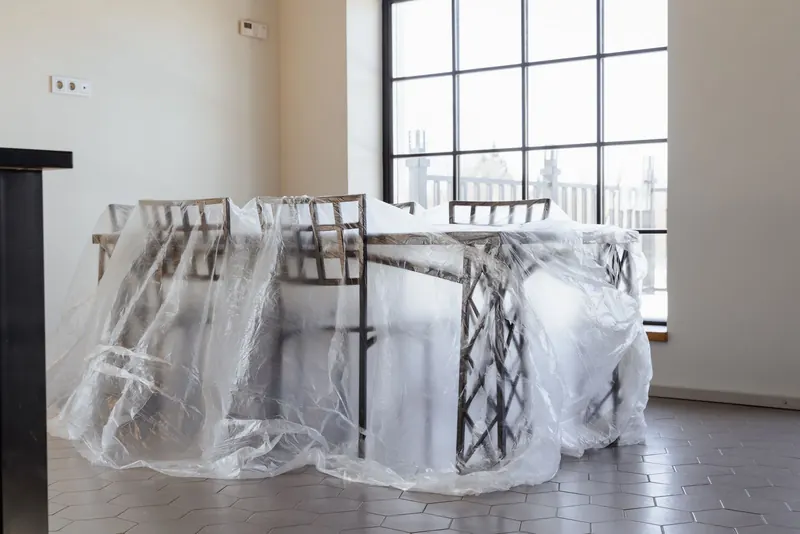
Poly sheeting forms a containment barrier. To reduce spreading mold spores, controls include protective equipment, a HEPA air scrubber and, where appropriate, negative air pressure.
Damaged Building Material Removal
Inside containment, damaged materials go into bags. Affected cavities become accessible through drywall removal; debris follows a planned path clear of occupied spaces.
Cleaning Remaining Surfaces
HEPA vacuum cleaning and appropriate damp wiping clean non-porous surfaces and framing that remains sound. Antimicrobial treatment does not replace removal and cleaning.
Controlled Drying
A dehumidifier and air movers support drying where suitable after contamination control. While correcting the water source, moisture readings show how drying progresses.
Post-Remediation Verification
Verification covers drying and cleaning. An independent assessor documents findings in a clearance report after performing clearance testing, when specified.
Containment Removal
Barriers come down after verification. Separate reconstruction or equipment reinstatement follows where needed before normal use resumes.
Your Commercial Mold Remediation Choice: Why Boston Mold Removal Services?
Clear Scope Before Work
Business access, affected rooms and separate repairs are defined before containment goes up.
Commercial Moisture First
Before removal, your assessment tracks down condensation and leaks.
Removal Through Final Checks
Damaged materials are removed, surfaces are cleaned and dried, and verification precedes containment removal.
Contained Commercial Work
Containment and HEPA filtration suit the space, with debris routes planned around occupied areas.
Calls Answered 24/7
You can begin commercial cleanup throughout the metro by calling one number, night or day.
Preparing for Commercial Mold Cleanup at Your Suffolk County Property
Keep the affected space undisturbed and call to arrange your assessment.
- Restrict entry. Your staff and customers should remain clear of wet materials and growth you can see.
- Leave affected stock in place. Avoid carrying moldy cartons or furniture through clean business areas.
- Avoid disturbing growth. Avoid sanding or scraping affected ceiling tiles and walls, and never dry-brush them.
- Keep clear of electrical hazards. Where business equipment, wiring or outlets are nearby, do not approach standing water.
- Stop suspect HVAC use. EPA says not to run equipment suspected of mold contamination because it can spread mold.
Your Commercial Mold Remediation Cost in Uphams Corner, MA
Access, the extent of affected space and how much material comes out shape your price. National mold cleanup figures are general, rather than commercial-only; the scope for your building sets its cost.
Typical national range, average $3,500
$1,500 to $9,000 per jobSource: Fixr, Mold Remediation Cost (checked 2026-10-23)Rates for professional work above roughly 10 square feet
$10 to $30 for each square footSource: Fixr, Mold Remediation Cost (checked 2026-10-23)A mold area of around 100 square feet
$1,000 to $3,000 per jobSource: Fixr, Mold Remediation Cost (checked 2026-10-23)Why Your Commercial Mold Cleanup Price Varies
- HVAC involvement
- Access around equipment
- Affected area and removal depth
- Phased remediation and operating-hour limits
- Containment and HEPA filtration
Your Cost for Commercial Mold Cleanup
These published national ranges are planning figures. Your on-site assessment defines the work and price before cleanup starts, including any separate source repairs or rebuilding.
Call (844) 352-3560 about costCommercial Mold Remediation Service Area Across Greater Boston
Call (844) 352-3560 to arrange cleanup in Uphams Corner or nearby communities. One number covers the metro.
Commercial Mold Remediation in Locations Near Uphams Corner
ZIP codes
Answers to Commercial Mold Remediation Questions in Uphams Corner
How much will commercial cleanup cost in Suffolk County?
Containment requirements, equipment access, affected square footage and how deeply removal extends determine your price. Sourced national figures in the cost cards describe general mold work, rather than quotes for commercial projects. Shared systems and replacement materials, along with work done in phases, may affect your total. Before cleanup begins, your assessment defines both the work and the price.
Which finishes in your commercial space need removal?
Moldy ceiling tiles, carpet, insulation and damaged drywall may need removal because growth can extend into porous materials. Sound framing and accessible hard surfaces can often be cleaned and dried. Your scope follows the actual damage and access needs. Only specifically listed replacement finishes and reconstruction belong in the work.
Can your business stay open during removal?
Unaffected spaces in your occupied building may stay usable if ventilation and access keep those spaces separate from the work zone. Your assessment addresses staff, customers, deliveries and emergency routes. More space may have to close if damage is extensive or HVAC is shared. Containment by itself cannot confirm that remaining in the building is appropriate.
Are leaks and ventilation problems fixed too?
Finding the moisture source and specifying necessary fixes are part of your assessment alongside cleanup. Your scope must list roof, plumbing and ventilation repairs for those repairs to be included. Before removal starts, separate repairs are identified to avoid enclosing cleaned surfaces and replacement materials around a dampness source that remains unresolved.
Is commercial mold testing required ahead of cleanup or following the work?
EPA guidance says air sampling is often unnecessary when visible mold is present. Inspection and moisture checks establish the affected materials and cleanup scope. After removal, cleaning and drying are verified before containment comes down. If clearance testing is specified, an independent assessor conducts the testing. There is no federal limit for mold levels indoors.
Will mold return after your building is cleaned?
Mold may reappear when the moisture issue is left uncorrected. Your cleanup assesses moisture from leaks and condensation first, then takes out damaged material and cleans surfaces that can be saved. Drying and fixing moisture issues happen before replacement finishes. Ongoing humidity control and completed repairs help prevent the conditions that allowed growth to develop in your building.
How long does commercial cleanup take in Uphams Corner?
Your schedule follows assessment of materials, access and drying needs. Restaurants, schools or hotels with occupied rooms and shared ventilation differ from warehouses or retail space. Timing may change with after-hours work and phased remediation. When each space can be used again depends on separate repairs and moisture readings.
Commercial Mold Cleanup and Insurance in Massachusetts
Your commercial coverage rests on why moisture occurred, policy exclusions, the deductible and mold limits. Cleanup, business interruption and repairs may receive different treatment within a claim.
Commercial Mold Safety for Your Greater Boston Property
Containment and controlled access limit particle spread during work.
Contaminated Water
EPA calls for professional help experienced with sewage or contaminated water damage.
Hidden Dampness
Surface dryness tells you nothing conclusive about insulation or cavities concealed behind the surface.
Occupant Sensitivities
Mold may trigger symptoms of allergies and asthma in some people, as CDC notes.
Mold Color Cannot Establish Risk
Color cannot tell you the risk of a mold, as CDC explains in its guidance.
Cleanup scope: EPA guidance for homeowners often permits cleaning mold in areas below about 10 square feet. Assess workplace occupancy separately; seek professional help for larger areas, affected HVAC or contaminated water.
Commercial Materials Cleaned or Removed in Suffolk County
Material condition and access determine what is cleaned or removed.
Sound surfaces
- Cleaning covers reachable tile, glass and metal, while structurally sound framing receives cleaning plus drying.
Damaged porous materials
- Removal may be needed for moldy insulation, carpet, drywall and suspended ceiling tiles.
Business contents
- Furniture, stock and electronics receive separate assessment before cleaning, relocation or disposal.
Your Suffolk County Timeline for Commercial Mold Work
Your project schedule follows access, removal volume, moisture readings and repair timing.
- Isolated room: Drying measurements and damage hidden from view determine when repairs can begin.
- Occupied floor: Planning each phase accounts for work windows and routes for access.
- Shared HVAC or multiple suites: Nearby occupants and assessment of systems influence the work sequence.
Commercial Moisture and Odor Concerns in Uphams Corner
Checks of materials and moisture help trace your musty smell. Adding fragrance neither removes affected materials nor fixes incoming water.
Correct leaks and ventilation faults, then use humidity control to support prevention in your building. EPA recommends keeping relative humidity indoors below 60 percent; the ideal range is 30 to 50 percent.
Commercial Cleanup Requirements for Your Massachusetts Property
Commercial Work Requirements
The Massachusetts Department of Public Health mold guidance describes cleanup practices and local enforcement, and it does not point to a statewide mold remediation license. Ask any contractor about their mold training, and check with your city or town about local contractor rules.
EPA Guidelines for Drying
To prevent mold growth, dry areas and items damaged by water within 24 to 48 hours.
Repair Permits
Whether permits are needed depends on your scope's structural, electrical or other repair work.
State Mold Information
The Massachusetts Department of Public Health, Bureau of Climate and Environmental Health runs an Indoor Air Quality Program. Its guidance says the way to control mold is to control moisture, and that routine mold testing is generally not recommended.
State guidance: Mass.gov, Guidance Regarding Testing for Mold in Water-Damaged Public Buildings (MA DPH Indoor Air Quality Program); Mass.gov, Massachusetts law about landlord and tenant (Trial Court Law Libraries, quoting MA DPH guide for occupants)
Related Services and Next Steps
Start Your Commercial Mold Remediation in Uphams Corner
Call 24/7 to arrange your assessment. Your cleanup starts with the affected surfaces, moisture source and access to your home.